Image Map
Showing posts with label country living. Show all posts

Wednesday, August 22, 2012

On sunflowers and growing up

Sunflowers and small children are memories of summer.

As the summer winds to an end and the children go back to school,
I am trying to enjoy these last days of summer
at home with my little one while the big kids are gone.

The sunflowers remind me that summer is fleeting, like childhood, and while the house always needs to be cleaned, a three year old wants to jump with you on the trampoline for only so long, then she is gone off to older childhood.

So I try to take the time and remember to play with her, even if I'm not always in the mood.
 Other things are really not as important as finding sticks to help her make a "campfire" and playing hide and go seek in the sunflowers.

I think I am feeling sad that my oldest is leaving for college soon.

This one above used to love to play for hours building fairy houses, and putting them down by the creek.
Her big sister used to make little notes and hide them in the little stick houses for her to find.
She had many little special spots around the yard where she played pretend games.

We planted all of these sunflowers as seeds in Spring. 
Isn't it amazing how fast they grow?
Kind of like children...


Pin It

Wednesday, August 1, 2012

Fruit Preserving Time! Butter Spiced Nectarines


Things have been busy at the farmhouse since I got back from my trip.
You see, My teenagers and husband stayed home on the last trip I took. 
As you can imagine, things were very yucky around here when I got back.
I can't say they didn't try to keep things tidy, the dishes were done.

But there seemed to be a thin layer of grime on everything.

Isn't it weird how you see all those little annoying things about your home upon returning after being away?

When we live in a place we often stop noticing all of the things that need to be done, but when we go away for a time and come back, suddenly they become noticeable again.

We see our homes through the eyes of a VISITOR.

Plus, the fruit on the trees was ripe when I got back and I had no time to waste!
I tied on my apron and got right to work cleaning and canning.
I have been cleaning closets, canning, and painting furniture all week!


I bought this cute woodblock print in Portland.


Last year I made way too much jam. Unopened jars still wither away on the shelf.
So this year I decided I would preserve sliced fruit instead.
How great is it to open a jar of fruit you canned in winter time?

Today I am sharing a recipe for butter spiced nectarines

Materials
Canning Pot
Caning funnel
Canning Tongs
Two quart jars and lids, sterilized in boiling water

Ingredients
4 pounds pitted and quartered nectarines
1/2 cup sugar
1/2 cup butter
1/2 cup water
2 tablespoons lemon juice.
1 teaspoon cinnamon
1/4 teaspoon cinnamon
1/4 teaspoon nutmeg
1/4 teaspoon cloves
1 teaspoon vanilla

How to make
Slice up and pit nectarines. 
Keep them in a bowl of vitamin C water in the meanwhile so they don't turn brown.
In a heavy pot, melt sugar and butter together. Add the nectarines and cook for a few minutes. 
Add the spices, lemon juice and water. Bring to a boil for one minute.
Ladle into two quart jars. Fill to the top with the melted syrup mixture.

Now lower your jars into your boiling water bath and boil for 15 minutes. Make sure water covers your jars by one inch or more!
Pin It

Sunday, July 29, 2012

Country snapshots: finding eggs for mom

It was Sunday morning and everyone wanted pancakes.
But we needed eggs.
So out went our little egg collector wearing her little apron and wellies.

Careful not to let the doggy in to scare the hens!

We needed two eggs for our recipe.
Perfect!


The little egg collector now had to bring these eggs safely to the kitchen without dropping and breaking the precious cargo.


In exchange for her hard work, our little helper got to stir the mix!
Pin It

Monday, July 2, 2012

Summer Kitchen Garden Progress....

Congrats to Nothy Lane of the AFT AGLEY blog for winning the Indygo junction One Yard Overlap Apron!
Perfect for working out in a summer garden.

Speaking of gardens....

Our garden is coming in late this year. 
There is not a red tomato in sight yet. But we do have some other things we have been feasting on like lettuce, spinach, turnips, beets, and lots of cucumbers.


We love a freshly picked salad from the garden.

Our tomatoes and peppers still have some growing to do.

Homegrown strawberries get eaten before they can make their way into the kitchen.

There is going to be a lot of corn in August. If we can't eat it all the chickens will.
A natural growth chart!

Richard works hard in the garden. I have to admit he does most of the work in the garden.
 He likes to make a fire in our firepit after a hard day working in the yard.
We stuck some shells into it for decoration.


Pin It

Monday, June 11, 2012

Dreaming of an Old Fashioned Clothesline

There is something sweet about the image of a mother and child hanging laundry at the clothesline together.

It reminds me of simpler times when life wasn't so complicated.The image of white linens flowing in the breeze on the line is such a classic one.

Of course the reality is dragging hot, wet laundry outside on a hot summer day is probably anything but glamorous. I don't know because I have always had a clothes dryer. I am installing a clothing line to dry delicate things and linens but I don't think I would have the energy to dry all of the laundry on the line.....Although dragging it outside and all the lifting and such is probably good exercise.

 Modern housewives are so lucky to have a choice. 

I have always thought it odd that in warm and mild Southern California where I live there are so few people who use clothing lines outside to dry their clothing. There are  laws and ordinances here that ban visible clotheslines from certain suburban neighborhoods. Things like clotheslines and chickens roaming in the yard are considered unsightly  in a lot of California areas.
 But people's attitudes about these things are changing thanks to the urban homesteading and green living movements. Did you know the clothes dryer is probably the biggest electricity waster in the home besides the refrigerator?

 I have been lucky enough to have lived abroad and have traveled to several foreign countries. 
And everywhere outside of the US, the clothesline is seen. 

My dad used to describe growing up in New York City in the fifties and this is what it looked like:

You will find clothing hanging outside small apartments in Europe, Japan,and Mexico. Few homes abroad have a clothes dryer at all.

When I was buying appliances for our place in Pezenas, France ten years ago, and asked about a dryer, the salesman explained most people didn't have dryers but pointed me in the direction of the meager stock of clothing dryers which were very expensive. I guess he wasn't on commission because he wasn't too concerned about selling us one. 
We opted to dry our clothes on the line too. Electricity in France is so expensive compared to the US. 
Apparently clothing dryers were thought of as a wasteful luxury. 
Sort of like the big, American cars we drive. I'm not sure if attitudes about clothing dryers have changed in the last 10 years in Europe or not. However, one of my best friends moved to France and has a baby and husband there. She does have a dryer but tells me not many families have one.

 I grew up in an old 1920's bungalow in Los Angeles.We had an old galvanized metal clothesline in the backyard.  There were two T shaped poles with attached hooks to hold the line. 
We used the electric dryer.
Homes aren't built with clotheslines anymore but I did find a steel T shaped bar online through Wal Mart similar to the one in my childhood back yard. I bought two of them but they don't look nearly as strong as the old ones.
I am looking forward to installing it. It will look so vintagey.
 I can't wait to photograph my creations on it! 
Now if I can only get my husband to help me dig some holes and mix some cement to install it.... Pin It

Friday, April 13, 2012

Raising Chickens 101 Good Breeds For The Beginner


Chicken breeds
There are over 400 breeds of chickens!
hi everyone! I am on vacation in Tokyo right now! It is raining outside but we are going to the fish market anyway to have sushi for breakfast! Then on to Nippori to buy fabric. I love Japan! Anyway, I prepared a post for you for my chicken series before I left and here it is: Here are the most recommended breeds for the person who wants to get started with raising chickens for eggs. These chickens are also easy to find locally and have good attitudes in general!:

White Leghorn
White leghorns- These are the best egg layers.

Araucana
Araucanas or Eater eggers lay bluish green eggs.

Orpington
Orpingtons known for gentleness and large brown eggs.

Wyandotte

Wyandotte have a pretty lacy pattern on the breast, are super friendly and good layers. They are also known for broodiness,which means they make good mama hens!

Rhode Island Red are a common breed that are good layers and broody as well.

Heritage Chickens
You may have heard of this type of chicken.
Heritage breeds are historic breeds that are in danger of becoming extinct ,like heirloom vegetables, due to industrial farming practices.
Keep these breeds from becoming extinct and shrinking the gene pool of chickens by raising some.
You can find a list of heritage breeds online and there are special hatcheries you can order them from.


Pin It Photobucket

Friday, March 30, 2012

Chickens 101: Building your chicken coop


My speaking engagement at the Craftcation Conference in Ventura this past weekend went well!
 I attended some good workshops like making mozzarella cheese in half an hour and the history of the DIY movement. I met sewing celebrities Christine Haynes the author of Chic and Simple Sewing and Jenny Hart, the author of Sublime Stitching! There were lots of fun and crafty workshops, especially for the beginning seamstress.
In speaking to the attendees at my workshop, a lot of crafty types are getting into raising chickens right now.
Chickens are hip!
I think raising chickens, sewing, growing your own food and doing homemade crafts with your kids are all ways to live a more simple and crafty life.
So why am I blogging about chickens on a sewing blog?
Because I think you should try it!
Welcome to the second installment of my homespun living series, Chickens 101
Click here to read part one: 
CHICKEN COOPS!
Getting your Coop Ready

Before you buy your chickens you need to have your coop in place.
As mentioned before chickens are social so plan on starting with at least two hens. 
You can have a coop only and let your chickens pasture freely in your backyard
or have a coop with an attached and fenced run to protect your garden. Chickens can make a mess of the yard!
I let my chickens roam freely but I do have a fence around my vegetable garden.
You do need a yard to have chickens, even if only a very small one. They need dirt.
If you choose not to have a run, make sure you shut up your hens securely in their coop  at night.Raccoons and coyotes and large owls strike even in urban environments!
You can convert an outbuilding in your yard or you can buy a small portable flowerless coop on wheels that can be moved around your yard called a chicken tractor.

Essentials for a chicken coop

The truth is people have been raising chickens for thousands of years without all of the requirements I am about descibe!
But if you want to avoid a stinky backyard and chicken disease this is good advice to take.
You will need a coop for sure and an attached run, and area where the chickens can roam outside that is fenced is good too.
Proper Fencing and latched gates for your coop are essential and your run should also have one.
You can have normal gate fencing around your run but line the bottom with wire mesh to keep out snakes.

A well ventilated coop
Ammonia buildup and heat problems in the summer can be deadly in a hot, unventilated coop.
Mesh walls on three sides of the coop are ideal.
Choose strong wire mesh.
Predators can break through chicken wire!
You need plenty of light because the chickens' laying instinct is triggered by light so if your coop is very dark you might consider installing a lightbulb to turn on during the day.
But make sure your nesting boxes are in a darker part of your coop because although light triggers hens to lay they like a dark spot when they actually sit down to lay an egg.

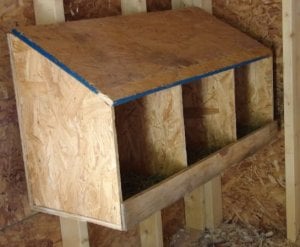
Nesting boxes

You need nesting boxes for your hens to lay their eggs in.
3 hens can share one box.
You can buy nesting boxes at feed stores or you can improvise your own from old crates or even cardboard boxes.
You can build your own from lumber and can find lots of tutorials online.

Roosting poles

Hens are birds and like to sleep on a perch.
Your roosting pole should be about 2 inches in diameter.
Don't use metal pole or PVC piping because chickens need a rough texture for their feet to grip on.
You can use.


  • Wooden dowels
  • 2 inch wide wooden Closet poles
  • Tree branches
Place your poles about 2 feet off the ground or you can use a staggered ladder type perch so they are abocve and behind each other and each gets their own little perch.
I have an antique ladder with rounded rungs that I have propped against the wall.

Droppings tray. 
Place an old board under the roosting poles.
Chickens poop a lot in their sleep and it will drop down
You can take the board out and scrape them into compost pile.

Bedding:

I recommend the deep litter method:
Here is  how:
Start with a clean henhouse.
Throw about a 5 inch layer of straw or wood shavings on the floor.
If you have a run outside you can cover that with hay or shavings too. It will break down naturally and you wont need to remove it.
When you check the coop you can scoop out droppings with a small shovel. 
Then rake the hay a little and add more hay or shavings on top weekly.
Once the bedding is about a foot high, remove it with a rake and replace it with new hay, about every few months.
Once a year in spring,remove all the bedding and scrub down your coop.
Don't forget to compost all the old bedding.
The rich nitrogen is very good for the compost.
Deep litter bedding keeps chickens warm in winter and the smells will be minimal with this method.
If you do smell  a strong smell of ammonia you will know it is time to  replace the bedding.


Pin It Photobucket

Friday, March 23, 2012

Home Spun living Blog series: Chickens 101

Welcome to my new blog series,
"Homespun Living"
On Fridays, I will be posting about different aspect of handmade living .
The first subject I will be covering in this series is raising chickens.
This series focuses on raising hens for eggs.

Are you a crafty type person who likes :
Sewing
Gardening
DIY Projects?
Do you want to be even more self- reliant?
Why not raise some hens?

WHY RAISE CHICKENS?
  • Eggs that are healthy and delicious for your family.
  • It's pretty simple to do. If you can raise a dog or cat, you can raise chickens.
  • Most suburbs, cities, and towns allow a small flock of hens. 
  • You don't need a rooster to have hens who lay eggs and roosters aren't allowed in most towns because they are so noisy. I have one but I live out in the country.
  • When you read about what goes on in factory farms you will not want to eat their eggs...
  • A fun and rewarding educational experience for your children. There is nothing like needing eggs for a recipe and going out to the hen house to gather them with your little one!
  • Chickens create the world's best fertilizer for your garden.
  • Chickens in your yard eat ticks, mosquitoes, and other pesky bugs.
  • Chickens can be raised in even small backyards.
  • Chickens can be hilarious to watch and each one has a different personality.

BEFORE YOU GET STARTED
Zoning:
Before you get started you need to find out what the zoning ordinances are for raising chickens where you live. Contact your animal control office or your city hall to find out. Most places allow a few hens but if you want more than a dozen hens or want to add a rooster to your flock you may need a permit.

Neighbors:
If you have neighbors you may want to discuss your chicken raising idea with them before you get started. You don't want to ruffle any feathers!

Space Requirements:
Chickens need about 10 square feet of outdoor space per bird. Plan to start with at least two hens. They are social creatures and don't do well alone.

Time Requirements:
If you want to start with chicks you will need to devote about a month of intense supervision to raise them. But once they are old enough to be outside maintenance is relatively simple. Plan on about 10 minutes a day for chores like raking bedding, gathering eggs, and putting out fresh food and water. Set aside a couple of days a year for larger chores like removing and replacing the deep litter bedding and disinfecting the coop.

Next Friday I will be discussing how to get your first coop set up!

Pin It Photobucket

Tuesday, March 13, 2012

On Living Handmade: Eating Locally Caught Seafood

In our quest to eat local, grow what we can and avoid products made in foreign sweatshops and grown on conglomerate farms,( pink sludge anyone?) Richard  has started buying our seafood on Saturday mornings at the docks in Ventura. There are some Japanese fishermen who go fishing at The Channel Islands in the wee hours and come back with a fresh catch the same morning. I had no idea you could buy fresh seafood like this in Ventura.  I had been buying our seafood at Trader Joe's and Fresh & Easy but after reading and watching on the news about how the shrimp farms in Thailand in Vietnam are often polluted with sewage runoff  I stopped buying shrimp at the market unless it was from New Zealand and that is expensive!
If you live near the ocean you might want to try going down to the docks and buying your fish directly from the fishermen. assuming it is caught legally and not at the shore where water can be contaminated.
We bought fresh shrimp, sardines which were amazing, nothing like the canned kind, and sole this time. It did takctra time cleaning and filleting the seafood. But we had some great Italian wine  bought on sale at Trader Joe's so it turned into a little party! So why buy seafood that was farmed thousands of miles away when you can buy it locally if you live near the ocean like I do? If the seafood is coming from another country and is farmed how are we to know it's been properly packaged and raised?
We don't really.
Pin It Photobucket

Friday, March 9, 2012

Friday At The Farmhouse

Thanks for stopping by Sew Country Chick!
No sewing projects today but I promise there will be plenty next week. For now have a take a look around my yard! It's been a beautiful last few days here in California.
Out in the garden.


Two of our seven hens.
A Mosaic pot I made about fifteen years ago with my stepdaughter when she was little. It's gotten pretty weathered.

My antique iron bed on the porch. I bought it in Isle Sur la Sorgue, France. Unfortunately the dogs have taken it over..

Another view of our front porch. Those old bistro chairs are from a restaurant in France and the chicken was made by a local artist.

I love this old shed in the backyard.

An old washbasin that was here since before we moved here.
The fire pit where we spend a lot of time on warm summer nights. You can see so many stars.
Well, that's it for today! I hope you stop by tomorrow to post your sewing projects and have a nice weekend.

Pin It Photobucket
Related Posts Plugin for WordPress, Blogger...